Published in the IRJ: Delivering Railway Projects in High Risk Markets, Syria and Libya
By Sophia Nina B-A
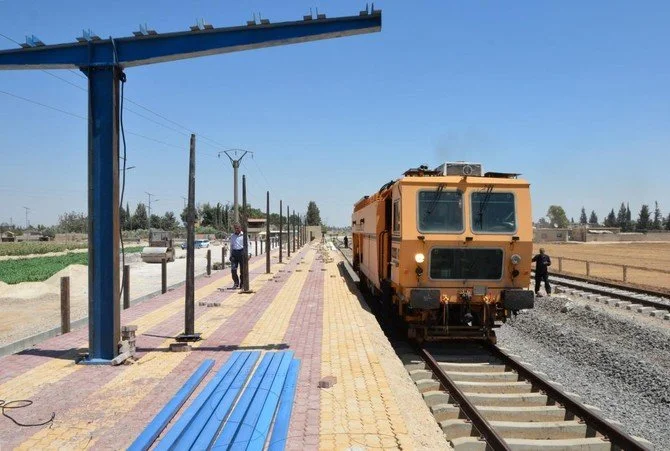
In my latest article for the International Railway Journal, I consider how investors can manage the risks facing railway projects where the local political climate is unstable. Syria and Libya are prime current examples.
It’s been a fascinating few months of meetings with Syrian and Libyan government representatives, members of the business community, international development banks, and researchers. In short, as Syria and Libya face their next chapter, both are now looking to attract foreign investment and accelerate the pace of railway development.
It goes without saying that each has its own unique context and development paths. And yet, compared to many other conflict-affected contexts, Syria and Libya feel like a rare window of opportunity for post-war reconstruction.
For example
In Syria:
In Syria, talks are underway between the World Bank and the Syrian Transport ministry on a possible $200 million grant for several railway infrastructure projects and the United Nations Security Council meeting on Friday 15 May in New York to discuss the evolving situation in Syria. According to the World Bank, Infrastructure has been hardest hit, accounting for 48% of total damage, and rebuilding it is a top priority in the government's first national strategy for reconstruction, unveiled in March earlier this year.
And in Libya:
In 2025 several key events took place: resumption of ties with the World Bank; the UN Security Council gave permission for Libya's sovereign wealth fund to reinvest a portion of assets that had been frozen under sanctions imposed during the civil war in 2011; the China Civil Engineering Construction Corporation (CCECC) and Libyan Railways, agreed to restart work on three railway lines from Tripoli which was halted in 2011. And in August 2025 the Libyan Bank for Energy and Mining, was set up in Eastern Libya as part of the country’s reconstruction efforts.
Still, security challenges remain complex: lingering sectarian tensions, the risk of extremist remnants, and continued humanitarian needs.
The goal of this article is to provide concrete, actionable business recommendations for investors assessing the reputational risk of railway investment in politically fragmented states. In the article, I explore the political and security context of Syria and Libya today; the current state of the railway sector; ways in which financing can be obtained to bridge a project funding gap; appropriate risk allocation strategies; whether Syria and Libya are ready for Western rail freight operators; and compare Chinese, Russian, and Western investment strategies in Syrian and Libyan railway projects.
I look forward to keeping an eye on how things develop and to visiting the railway projects in person. I will be sharing my experience and key takeaways here!
Read the full online article here: https://www.railjournal.com/in_depth/delivering-railway-projects-in-high-risk-markets/