The Cold Chain in Uzbekistan
By Charles McCloy
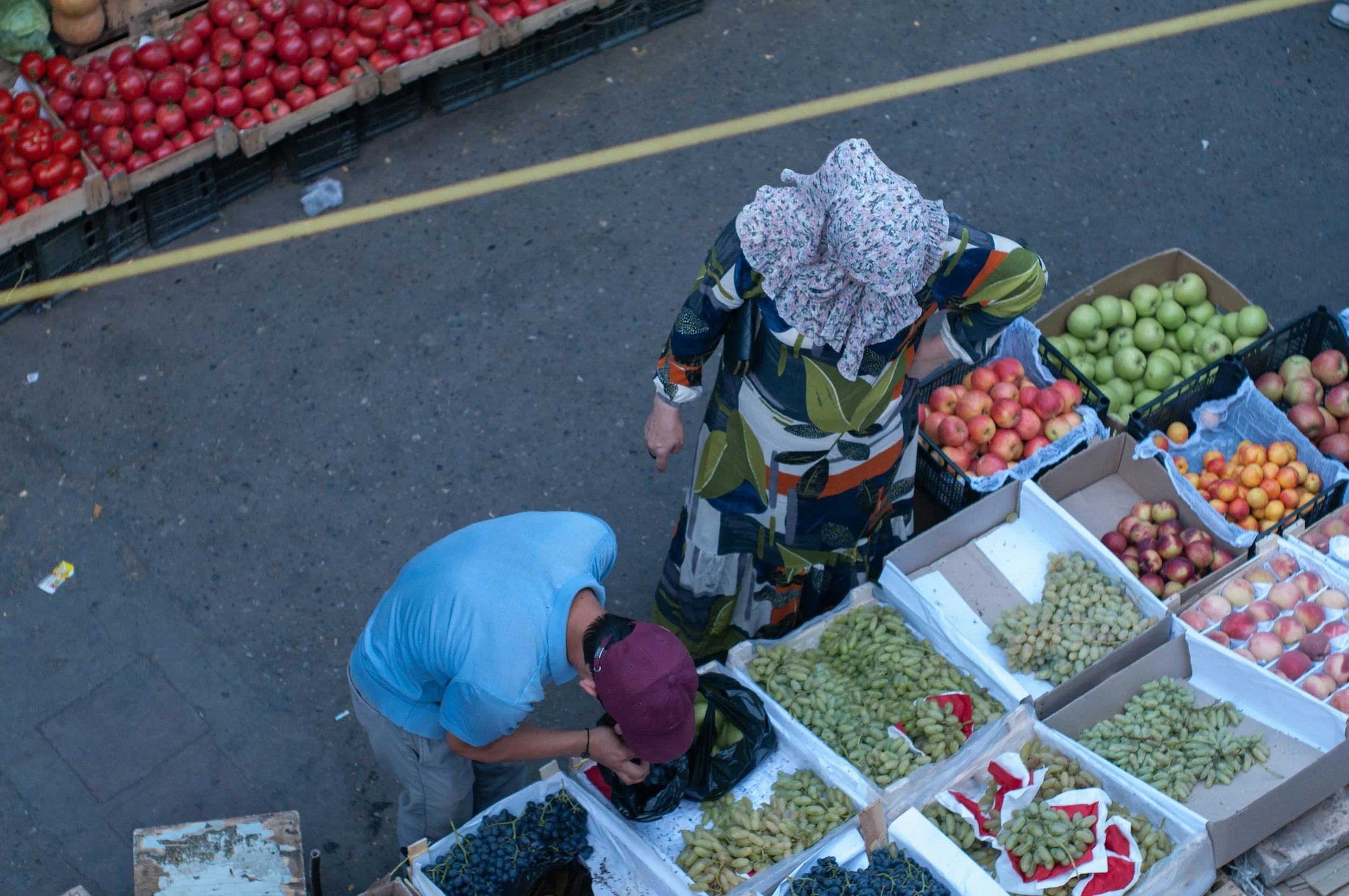
Chorsu Bazaar, Tashkent, Uzbekistan.
In the second article of our series about food security in Central Asia, we will take a closer look at the cold storage sector in Uzbekistan.
Uzbekistan is a country with 36.6 million people, which is forecast to grow to 48.5 million by 2050. This means that there will be a greater demand for food consumption and need for a modern and robust supply chain to support it. The country is already the largest producer of fruit and vegetables in Central Asia, accounting for approximately 50% of all output in the region.
Despite this, 30% of Uzbekistan’s fresh produce is lost due to insufficient storage, according to estimates by the International Trade Organisation. This is a result of the cold storage and wider logistics sectors being severely underinvested in since the fall of the Soviet Union. In turn, this has restricted the country from meeting its export and production potential. However, greater attention is now being paid to the sector through both public and private initiatives which we will investigate in this article.
Underinvestment has led to an outdated supply chain
Historically, there has been a lack of investment in the cold chain in Uzbekistan which has led to a supply chain that does not align with the demands of greater production to feed a growing population. As a result the underlying quality of the real estate of cold storage facilities is poor: typically it is aging (over 30 years in age), lacking scale to store more goods, and not compliant with ESG standards by running on non-compliant CFC gases, rather than modern ammonia systems. At the same time, cold storage is not easy to replace: the costs to build a new facility are high and can be up to two times that of a standard industrial warehouse. This has arguably been a contributing factor to a lack of investment in the sector and led to the current situation where current capacity only covers 4.90% of the total annual production of fruit and vegetables in Uzbekistan, according to trade platform Fresh Plaza.
Efforts to modernise the cold chain initially came through international organisations such as USAID who helped to invest $23 million between 2015-20 to help scale private businesses, support export potential and the elimination of food waste, plus promote programmes of best practice. The results of such initiatives were an overwhelming success; in 2016 alone exports of fresh produce increased by 38% to more than 80,000 tonnes of fruit and vegetables thanks to more capacity and better infrastructure. Indeed, in 2020 cold storage capacity was 4 million cubic metres, an increase from 3.54 million in 2016, according to the Global Cold Chain Association (GCCA).
The occupiers of cold storage in Uzbekistan mainly consist of domestic third-party logistics (3PL), such as Lola LLC and Mega Storage, or Turkish company March Logistics who have a small allocation of their logistics business given to cold storage. Being a specialised sector, cold storage has not yet had the same level of entry from international players that the wider logistics market has enjoyed such as DP World, Maersk, and Rhenus Logistics. Cold storage 3PL operators are typically private enterprises that are based regionally in either growing areas (Fergana) or logistics locations near large populations (Tashkent, Samarkand).
Government initiatives are paving the way for a new generation of cold storage facilities
To stimulate growth in the sector, in 2025 the Uzbek government announced a national program known as the Priority Period for Food Security (2026-30). As part of this, the government will aim to introduce better practice with regards to food waste across the supply chain. Improvements to the current supply of cold storage facilities and processing capacity to reduce food loss is part of the program and is being implemented through development projects. In December 2025, construction started on a new USD 50 million Class-A agro-logistics complex in the Fergana region which will provide an additional 30,000 tonnes of cold storage capacity. This is part of a wider part-government backed venture UzAgroLogisticsCenters which in partnership with private investors such as Asian Development Bank. The plan is to develop further centres in Tashkent and Samarkand, both strong logistics locations for the transportation of goods across Uzbekistan and export to the wider Central Asia region. Separately, this follows the completion in 2024 of a further cold storage facility with capacity of 8,000 tonnes across 20,000 sqm for a private operator.
Finally, supermarket retailers are also active in improving the supply chain. In October 2025, Korzinka, Uzbekistan’s leading supermarket chain, opened new distribution centre across 49,000 sqm in Tashkent as part of a plan to centralise its operations and streamline its supply chain. This is a multi-temperature warehouse that provides frozen, chilled and ambient storage.
Conclusion: Progress being made, but still a way to go
As the economy continues to grow, so will Uzbekistan’s cold storage sector as there will be more pressure to modernise its supply chain infrastructure to meet the needs of producers and a growing population. Greater focus by the government on the sector is a real positive and has spurred on new investment such as the UzAgroLogisticsCenters project. As the sector develops, it is likely that new entrants will be attracted also. Despite this, there is a long way to go and the current pipeline of new developments, whilst a step in the right direction, still fall short of the need to correct the imbalance between food wastage and capacity available.