On the Right Track: Opportunities Emerging Across Uzbekistan’s Industrial & Logistics Market
By Charles McCloy
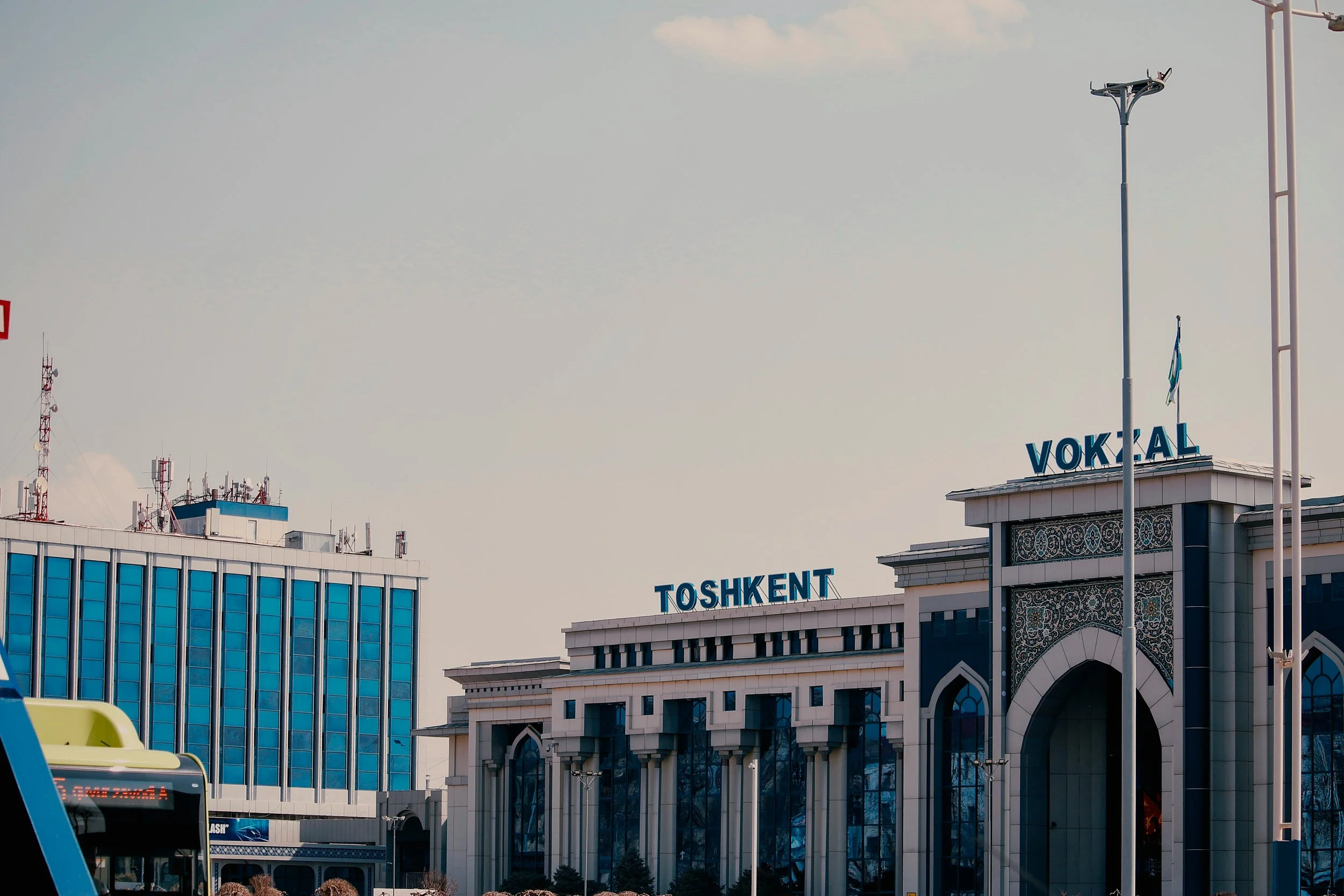
As a landlocked country in Central Asia, Uzbekistan is accessible via land and air only. This has previously made it difficult for Uzbekistan to develop economically, grow levels of trade with other countries, and has been a significant barrier to the country’s development.
This has been manifested across the logistics sector, which has been hindered by ageing infrastructure and has resulted in a poor transport network and a disrupted supply chain. In turn, this has hampered the development of a modern industrial market, which remains immature and is characterised by a lack of stock.
This issue is not exclusive to Uzbekistan and has been a problem across Central Asia. However, since 2017, reforms by the Uzbek government to build a competitive market economy have sought to change this by reducing import tariffs, liberalising prices on certain goods and establishing anti-monopoly regulations. These changes have led to signs of more robust growth from the private sector.
Despite this, the inherent issues of the logistics market remain due to poor supporting infrastructure. The need to find a solution is becoming more pertinent, especially in light of the current geo-political context, in which Uzbekistan’s significant mineral and oil resources will likely be in higher demand than ever.
Evaluating the Opportunities and Challenges
Infrastructure
According to the World Bank, the countries in Central Asia are some of the least connected economies in the world, owing to poor infrastructure. As a result, they have some of the world’s highest transportation costs, a fact that has undermined their competitiveness. This can be attributed to the geography of the region, which contains large land areas and mountainous terrain, posing challenges to the maintenance and costs of infrastructure. This has manifested in an ageing road and rail network, much of which has not been modernised since the fall of the Soviet Union. The networks are also oriented towards Russia, rather than other major markets such as Europe, India and China. Today, in Central Asia, only Kazakhstan (to China) and Turkmenistan (to Iran) have railroads leading outside of the CIS region. In particular, railroads are mostly single-track and ageing. To demonstrate this, Uzbekistan has c. 4,000 km of railroad, of which c. 10% is electrified, and only 0.4% is double-tracked.
In Uzbekistan, efforts are being made to improve the infrastructure, and it is one of the government’s priorities as they strive towards economic modernisation. The government has partnered with the Asian Development Bank (ADB) and CAREC – the Central Asia Regional Economic Cooperation Program – to help finance projects to improve the transport network. So far, $6.67 bn in funding for 24 transport projects has been co-funded by both parties since 2019. This includes a $233m loan to upgrade the strategic Guzar–Bukhara–Nukus–Beyneu (A380) highway in 2025, plus the funding to construct a new highway between Tashkent and the regional centre Andijan at a cost of $2 billion. Furthermore, in May 2026, Uzbekistan and the ADB finalised a new country partnership program framework projecting a further $12.5 billion in new projects running through to 2030.
Industrial
The historic issues impacting the transport sector have stifled development in the industrial market. There has been a shortage of new warehousing, whilst much of the existing stock is approaching the end of its economic life. A large proportion of industrial property is predominantly used for manufacturing and production, rather than logistics.
The majority of existing warehouses focus on Uzbekistan’s main export items: cotton, plastics, household products, and fresh produce. As such, many of the occupiers of industrial space have traditionally been local enterprises that have owner-occupied their facilities or leased from local landlords, which previously lacked sophistication.
However, efforts are being made to modernise the industrial stock and attract new players. The government has established three Special Economic Zones (SEZ) for industrial activity in regional cities Navoi, Jizzakh and Angren. Focussing on Navoi, the SEZ is located in the centre of the country between the large regional centres of Samarkand and Bukhara. It is also next to Navoi International Airport, which is mainly used as a cargo terminal and provides flights to major hubs such as Seoul, Mumbai, Moscow and Milan. This has brought a number of international manufacturers to the industrial park. These include: Landi Renzo + Ariston (Italy), OzMinda (India) and AgroFresh (UAE), plus others.
Industrial stock in Tashkent is mainly located to the south of the city centre (Mirabod, Yashnabod districts). Much of the warehousing is occupied by domestic businesses with a focus on textile and cotton production. However, in the past few years there has been the emergence of modern industrial stock as international companies such as Nestle, Zara, Korzinka, and BYD have taken space. In particular, it is worth mentioning Texnopark, an industrial enterprise park which opened in 2019. Used for manufacturing household and commercial goods, the park has 16 production facilities with occupiers such as Samsung, Whirlpool and Shanghai Mitsubishi. Plans are in place to expand the eastern part of the site as it looks to attract more companies.
Of the modern logistics schemes that do exist, Orient Group has developed three industrial schemes in key locations around Tashkent to provide modern Class A warehousing and logistics services. This includes Orient Logistics Centre, which includes a container terminal and 6,000 sqm warehouse with full cross-docking and storage, situated next to Tashkent’s ring road. Other schemes, the Highway Logistics Centre and the Chukursay Logistics Centre, provide similar services in key locations.
New stock is forecast to come online, including c. 100,000 sqm in 2026. Developments include the expansion of the Yangi Avlod Special Industrial Zone to the south of the city centre, where DP World is building a Multimodal Logistics Terminal. Phase 1 will consist of 63,000 sqm of Class A warehousing, dry port, and rail terminal. Elsewhere, Phase 1 of the Silk Road Central Asia Logistics Centre, a joint venture between Kazakhstan’s PTC Holding and Uzbekistan Railways, will see 167,000 sqm of Class A and B warehousing built as part of a $300m investment to improve the transport infrastructure along the Trans-Caspian / Eurasia logistics corridor. Phase 1 is forecast to be completed in early 2027.
Outlook
After years of stagnation, decisive action is paving the way for faster growth across Uzbekistan. Improving infrastructure is seen as key to unlocking the country’s potential; the World Bank estimates that improvements to the transport network could boost GDP by 15% when the combined benefits of reduced transport times and trade barriers are realised. Nonetheless, there remains a long way to go and challenges to overcome. Significant levels of investment are required in order to realise the opportunity, and in effect this is the same for the industrial market.
Further investment in the industrial market through schemes such as Texnopark and the continuing development of more Class A space will help to attract more international companies. Commitments by major players such as DP World serve to demonstrate this.
Uzbekistan’s inherent potential is considerable and this is underlined by its strategic geographic position and natural resources. Improving the country’s ability to import goods, talent, and services to where they are needed will facilitate faster economic growth and the resulting development of its industrial real estate market is likely to be rapid as a result.
Are the stars aligning for Uzbekistan’s real estate sector? There are clear signs that this may be the case.