By Sophia Nina B-A
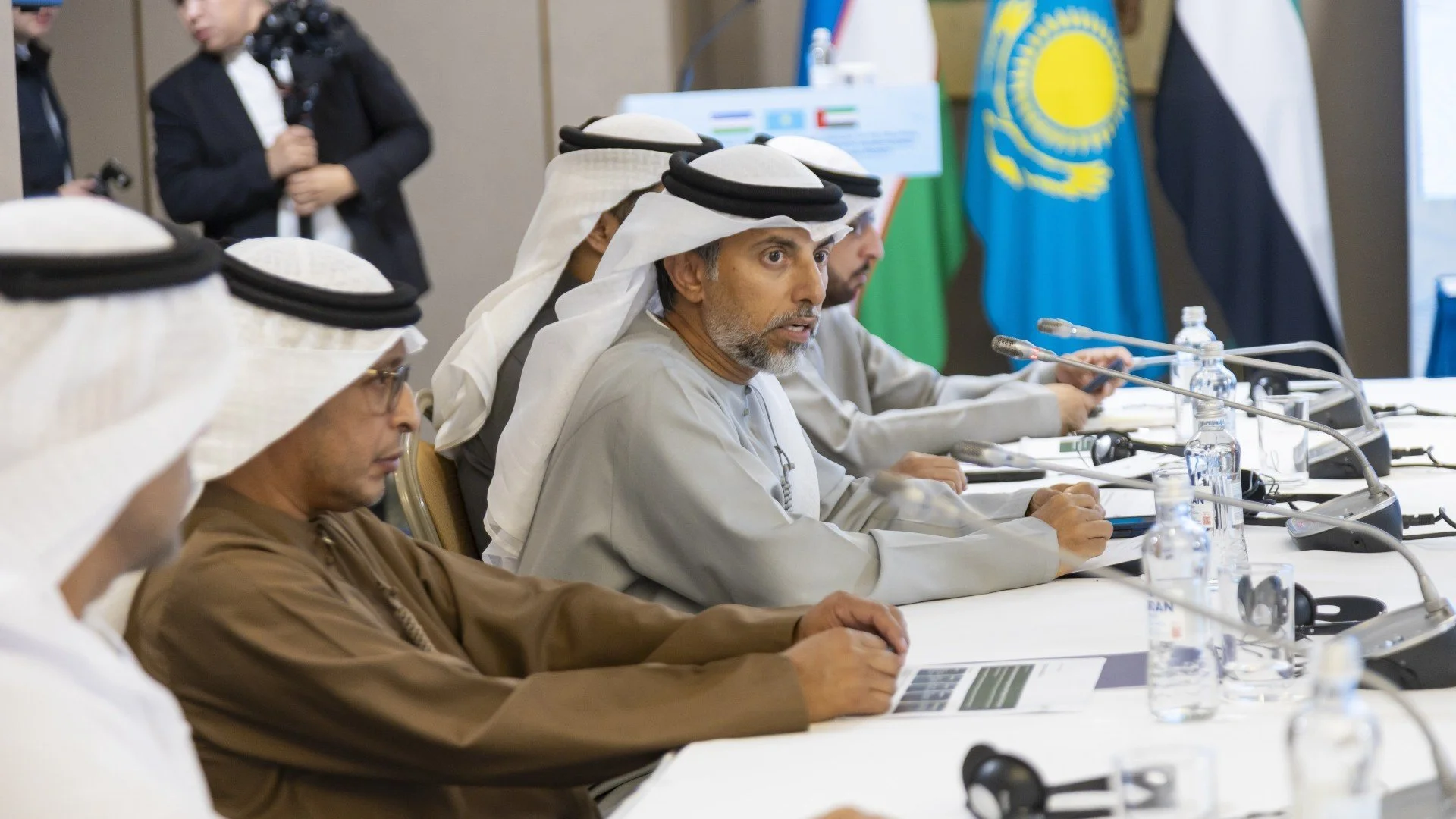
UAE Minister of Energy and Transport, Suhail Mohamed Al Mazrouei, speaking at the meeting on 30th September 2026 in Astana, Kazakhstan for the signing of the memorandum on the Kazakhstan-Uzbekistan-Afghanistan-Pakistan railway project.
There’s been much fanfare about the memorandum signed at the end of September 2026 between Kazakhstan, Uzbekistan and the United Arab Emirates, alongside a trilateral feasibility study agreement on exploring railway routes through Afghanistan. It’s being termed the CASA railway route (Central Asia South Asia), linking Central Asia to Afghanistan and onto Pakistan. The route intends to connect Kazakhstan-Uzbekistan-Afghanistan-Pakistan by rail, with goods then shipped from Pakistan’s seaports to the Middle East, which is where the UAE could benefit.
I have penned together a few bullets where I draw a clear line of what’s been said and how I think about it. This short memo includes what the CASA railway project means, how Kazakhstan views it, and under what circumstances it could pose a risk to Kazakhstan’s relationship with the UK and the US.
The CASA railway project shouldn’t be confused with the CASA-1000 electricity transmission project, which is a project looking to export electricity from Central Asia into Afghanistan. I’ve noticed a lot of news outlets that have written about this which is a bit confusing. I have written in detail about the CASA railway here.
Until a few years ago, Kazakhstan had little plans to invest in Afghan rail and it was largely a role taken on by Uzbekistan and the Asian Development Bank (Termez-Hairaton-Mazar Sharif railroad for example). But the outbreak of the Russia-Ukraine conflict in 2022 changed the risk calculus. Kazakhstan’s search for alternative supply routes became critical to the government’s national security agenda.
Afghanistan conundrum: On a map a railway through Central Asia to Afghanistan is the shortest and direct route to reach Pakistan’s seaports and ship internationally. But the Taliban government has made it diffilcult to make concrete plans. instead plans are in constant flux because the Taliban government are divided internally between the Taliban supreme leader Hibatullah Akhundzada seems to be more polarised from the Eastern, Northern and Southern Taliban groups. While Akhundzada has a background in Islamic law, he doesn’t have military/battleground experience as opposed to the other senior Taliban group leaders which is causing frustration/lack of empathy. Also other senior Taliban commanders have different objectives when it comes to how to run the country.
Different Afghan exiled commanders/ former warlords are voicing support for infrastructure projects and guaranteeing their own security seperate from the Taliban gov but it is not clear how this will work in practice.
Uzbekistan’s history of customs control and spontaneous border closures with Kazakhstan, particularly over Kazakh grain, has sparked internal debate over which Afghan railway route to invest in (via Turkmenistan but has Iran as a neighbour and freight capacity limited with outdated trains/bogies, or via Uzbekistan but this could result in a monopoly of control with customs/tax)
The China-Kyrgyzstan-Uzbekistan (CKU) railway construction is proceeding and for Kazakhstan they aren’t so keen on this. Because before, Uzbekistan could only export goods to China via Kazakhstan and now with the CKU railway, Uzbekistan wouldn’t have to, and this will not only cause a loss of profit for Kazakhstan but also can boost trade between Uzbekistan and China. This adds to the tension and apprehensiveness of Kazakhstan choosing to invest in Afghan railways via Uzbekistan.
Both Kazakhstan and Uzbekistan want to be seen as a regional leader in their own right and so a lot of competition (more than cooperation) tends to be prevalent.
If cargo/strategic goods end up in hostile countries, that could put their ties with the US/UK at risk, particularly as tensions flare between Russia and the UK and Iran and the US. Possible secondary sanctions risk, export controls or if situations escalate railway projects could be a military target and risk of attack/looting/capture.
Kazakhstan is looking at the UAE for financing, with the latest CASA railway project memorandum signed on 30th September 2026. Kazakhstan’s national railways (KTZ) is currently unprofitable/has serious debts and loans, and while the government has announced its plans for an IPO for a few years now, they are hesitant to proceed because of how visible their debts could be and the KZ railways are still designated as a military asset, so it requires a change in the constitutional law also.